Buy 犬種.com ?
We are moving the project
犬種.com .
Are you interested in purchasing the domain
犬種.com ?
domain@kv-gmbh.de · 0541-91531010
Buy 犬種.com ?
'Will + participle 2?'
"Will + participle 2" is a construction used to form the future perfect tense in English. It is used to indicate an action that will be completed before a specific point in the future. This construction is formed by using the auxiliary verb "will" followed by the past participle of the main verb. For example, "By the time you arrive, I will have finished my homework." **
What are the Latin forms of the present participle, perfect passive participle, and future active participle?
The Latin present participle is formed by adding -ns, -ntis to the present stem of the verb. For example, the present participle of the verb "amo" (I love) is "amans, amantis" (loving). The perfect passive participle is formed by adding -us, -a, -um to the verb stem. For example, the perfect passive participle of the verb "amo" is "amatus, amata, amatum" (loved). The future active participle is formed by adding -urus, -ura, -urum to the verb stem. For example, the future active participle of the verb "amo" is "amaturus, amatura, amaturum" (about to love). **


Similar search terms for Participle
Top-Angebote
Products related to Participle:
-
Care+ Health Labs Care Solve On serum for skin with imperfections 30 mlHealth Labs Care Solve On, 30 ml, Skin Serums for Women, Does it feel as though your skin needs something more than just the care provided by a cream? The Health Labs Care Solve On facial serum is the perfect product to enrich your skincare routine – it pampers the skin and delivers an intensive treatment. With its high concentration of active ingredients, the effect it has on your skin is far more pronounced and faster than with a face cream. Its liquid consistency makes application easier, as it is absorbed into the skin very well. Characteristics: eliminates signs of acne hydrates and nourishes effectively tightens enlarged pores reduces excessive sebum production works on blemishes reduces redness has a soothing effect How to use: Dab an appropriate amount of the serum gently into clean skin with your fingertips. Apply to dry skin. Use every morning and/or evening.27,62 £*Shipping: 3,99 £Secure redirect to the provider
-
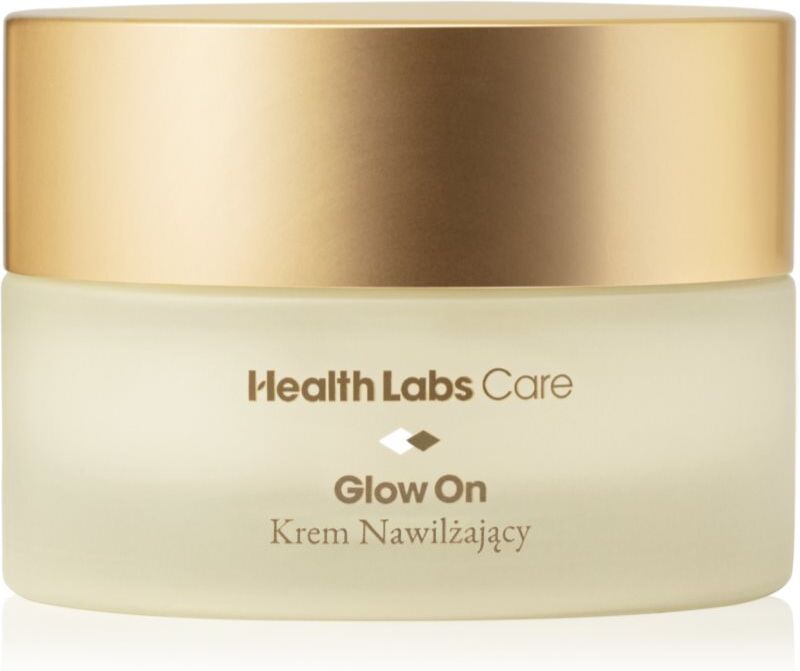
Care+ Health Labs Care Glow On Moisturising cream light moisturising cream 50 mlHealth Labs Care Glow On Moisturising cream, 50 ml, Moisturisers for Women, Do you want to keep your youthful appearance for as long as you possibly can? The Health Labs Care Glow On Moisturising cream face cream is perfect to use as the basis of your regular beauty routine. It helps fight the signs of ageing, slows down the appearance and deepening of wrinkles and, last but not least, boosts the elasticity, firmness and density of your skin. It also provides the nourishment and hydration your skin needs to stay fresh, smooth and supple. Characteristics: restores skin firmness and leaves it tight is absorbed quickly nourishes deeply makes skin fresh and bright How to use: Apply to clean skin and massage in using circular movements. Apply to the face, neck and chest. Use every morning and/or evening. Allow to absorb.28,82 £*Shipping: 3,99 £Secure redirect to the provider
-
Care+ Health Labs Care Solve On cleansing gel for face and body 200 mlHealth Labs Care Solve On, 200 ml, Cleansing for Women, Before you start your regular skincare routine, it is very important to prepare your skin with a thorough cleansing - without it, the following beauty care routine would not be nearly as effective. The Health Labs CareSolve On cleanser helps to remove all the impurities that have settled on the skin and in the pores throughout the day or overnight, leaving the skin perfectly clean and ready for any further skin treatments. Characteristics: reduces signs of acne for problematic skin works on blemishes regulates sebum production has a soothing effect hydrates deeply does not irritate the skin reduces redness How to use: Apply in the morning and/or evening to a damp face and lather. Suitable for everyday use.11,48 £*Shipping: 3,99 £Secure redirect to the provider
-
Care+ Health Labs Care Glow On Brightening eye cream brightening eye cream 15 mlHealth Labs Care Glow On Brightening eye cream, 15 ml, Eye Creams and Gels for Women, The eye area is a highly sensitive area, as the skin there is exceptionally thin and fragile, making it more susceptible to signs of fatigue and ageing. It therefore also requires special treatment with ingredients and consistencies designed exactly for its needs. The Health Labs Care Glow On Brightening eye cream eye cream takes care of specific issues in the eye area. It delivers the nourishment and hydration needed for the skin around your eyes, improving its quality and restoring its vitality and a fresh, rested look. Characteristics: reduces visible signs of fatigue makes your eyes look youthful refreshes and softens the eye area removes puffiness and dark circles under the eyes smooths wrinkles and fine lines How to use: In the morning and/or evening, apply the product around the eye contours by dabbing lightly until fully absorbed.25,92 £*Shipping: 3,99 £Secure redirect to the provider



-
What are participle clauses?
Participle clauses are a type of clause that uses a present participle (-ing form) or a past participle (-ed form) to provide additional information about the subject of the main clause. They can be used to show simultaneous actions, cause and effect, or to provide descriptive details. For example, in the sentence "Feeling tired, she decided to go to bed," the participle clause "Feeling tired" provides additional information about the subject "she." **
-
What is a participle?
A participle is a form of a verb that can function as an adjective or be part of a verb phrase. There are two types of participles in English: the present participle, which ends in -ing (e.g. "walking"), and the past participle, which can end in -ed, -en, -d, -t, -n, or -ne (e.g. "broken"). Participles are used to modify nouns or pronouns, and they can also be used to form verb tenses such as the present perfect or past perfect. **
-
What is the difference between the past participle and the present participle?
The past participle is a verb form used to indicate a completed action or state that occurred in the past. It is often used with auxiliary verbs to form the perfect tenses (e.g., "has eaten," "had gone"). The present participle, on the other hand, is a verb form used to indicate an ongoing action or state in the present or future. It is formed by adding "-ing" to the base form of the verb and is used to create the progressive tenses (e.g., "is eating," "will be going"). **
-
How can the terms premature, simultaneous, and subsequent be explained in relation to past participle, present participle, and future participle?
The terms premature, simultaneous, and subsequent can be explained in relation to past participle, present participle, and future participle based on their timing in relation to the action of the verb. The past participle refers to an action that has already been completed, making it premature in relation to the present moment. The present participle refers to an action that is happening at the same time as something else, making it simultaneous. The future participle refers to an action that will happen at a later time, making it subsequent to the present moment. These terms help to clarify the timing of the action in relation to the verb. **
What is a nominalized participle?
A nominalized participle is a verb form that has been turned into a noun. This is done by adding a suffix to the participle form of the verb, which allows it to function as a noun in a sentence. Nominalized participles are commonly used in various languages to express actions or qualities in a more abstract or general way. **
What is a substantivized participle?
A substantivized participle is a verb form that has been turned into a noun by adding a definite article and declining it for case, gender, and number. In other words, it is a participle that has been transformed into a noun and can function as a subject, object, or complement in a sentence. This process allows the participle to take on the characteristics of a noun while still retaining some of its verbal qualities. **
Top-Angebote
Products related to Participle:
-
Care+ Health Labs Care Solve On serum With AHAs 30 mlHealth Labs Care Solve On, 30 ml, Skin Serums for Women, Does it feel as though your skin needs something more than just the care provided by a cream? The Health Labs Care Solve On facial serum is the perfect product to enrich your skincare routine – it pampers the skin and delivers an intensive treatment. With its high concentration of active ingredients, the effect it has on your skin is far more pronounced and faster than with a face cream. Its liquid consistency makes application easier, as it is absorbed into the skin very well. Characteristics: reduces excessive sebum production tightens enlarged pores eliminates signs of acne exfoliating effect smoothes out uneven skin texture a reduction of dark spots How to use: Perform a tolerance test prior to use. Avoid direct contact with the eyes. Apply ideally in the evening. Apply 3 - 4 × weekly, increasing the frequency of use if the skin is tolerating it. Apply a high SPF product during the day after use.18,70 £*Shipping: 3,99 £Secure redirect to the provider
-
Care+ Health Labs Care Solve On face cream with ceramides 50 mlHealth Labs Care Solve On, 50 ml, Moisturisers for Women, Health Labs Care Solve On provides the right care for your skin. Characteristics: moisturises intensely soothes irritation and redness does not clog pores How to use: Apply to clean skin and massage in using circular movements. Use every morning and/or evening. Can also be used as a foundation primer.23,50 £*Shipping: 3,99 £Secure redirect to the provider
-
Care+ Health Labs Care Solve On serum for skin with imperfections 30 mlHealth Labs Care Solve On, 30 ml, Skin Serums for Women, Does it feel as though your skin needs something more than just the care provided by a cream? The Health Labs Care Solve On facial serum is the perfect product to enrich your skincare routine – it pampers the skin and delivers an intensive treatment. With its high concentration of active ingredients, the effect it has on your skin is far more pronounced and faster than with a face cream. Its liquid consistency makes application easier, as it is absorbed into the skin very well. Characteristics: eliminates signs of acne hydrates and nourishes effectively tightens enlarged pores reduces excessive sebum production works on blemishes reduces redness has a soothing effect How to use: Dab an appropriate amount of the serum gently into clean skin with your fingertips. Apply to dry skin. Use every morning and/or evening.27,62 £*Shipping: 3,99 £Secure redirect to the provider
-
Care+ Health Labs Care Glow On Moisturising cream light moisturising cream 50 mlHealth Labs Care Glow On Moisturising cream, 50 ml, Moisturisers for Women, Do you want to keep your youthful appearance for as long as you possibly can? The Health Labs Care Glow On Moisturising cream face cream is perfect to use as the basis of your regular beauty routine. It helps fight the signs of ageing, slows down the appearance and deepening of wrinkles and, last but not least, boosts the elasticity, firmness and density of your skin. It also provides the nourishment and hydration your skin needs to stay fresh, smooth and supple. Characteristics: restores skin firmness and leaves it tight is absorbed quickly nourishes deeply makes skin fresh and bright How to use: Apply to clean skin and massage in using circular movements. Apply to the face, neck and chest. Use every morning and/or evening. Allow to absorb.28,82 £*Shipping: 3,99 £Secure redirect to the provider
-
'Will + participle 2?'
"Will + participle 2" is a construction used to form the future perfect tense in English. It is used to indicate an action that will be completed before a specific point in the future. This construction is formed by using the auxiliary verb "will" followed by the past participle of the main verb. For example, "By the time you arrive, I will have finished my homework." **
-
What are the Latin forms of the present participle, perfect passive participle, and future active participle?
The Latin present participle is formed by adding -ns, -ntis to the present stem of the verb. For example, the present participle of the verb "amo" (I love) is "amans, amantis" (loving). The perfect passive participle is formed by adding -us, -a, -um to the verb stem. For example, the perfect passive participle of the verb "amo" is "amatus, amata, amatum" (loved). The future active participle is formed by adding -urus, -ura, -urum to the verb stem. For example, the future active participle of the verb "amo" is "amaturus, amatura, amaturum" (about to love). **
-
What are participle clauses?
Participle clauses are a type of clause that uses a present participle (-ing form) or a past participle (-ed form) to provide additional information about the subject of the main clause. They can be used to show simultaneous actions, cause and effect, or to provide descriptive details. For example, in the sentence "Feeling tired, she decided to go to bed," the participle clause "Feeling tired" provides additional information about the subject "she." **
-
What is a participle?
A participle is a form of a verb that can function as an adjective or be part of a verb phrase. There are two types of participles in English: the present participle, which ends in -ing (e.g. "walking"), and the past participle, which can end in -ed, -en, -d, -t, -n, or -ne (e.g. "broken"). Participles are used to modify nouns or pronouns, and they can also be used to form verb tenses such as the present perfect or past perfect. **
Similar search terms for Participle
-
Care+ Health Labs Care Solve On cleansing gel for face and body 200 mlHealth Labs Care Solve On, 200 ml, Cleansing for Women, Before you start your regular skincare routine, it is very important to prepare your skin with a thorough cleansing - without it, the following beauty care routine would not be nearly as effective. The Health Labs CareSolve On cleanser helps to remove all the impurities that have settled on the skin and in the pores throughout the day or overnight, leaving the skin perfectly clean and ready for any further skin treatments. Characteristics: reduces signs of acne for problematic skin works on blemishes regulates sebum production has a soothing effect hydrates deeply does not irritate the skin reduces redness How to use: Apply in the morning and/or evening to a damp face and lather. Suitable for everyday use.11,48 £*Shipping: 3,99 £Secure redirect to the provider
-
Care+ Health Labs Care Glow On Brightening eye cream brightening eye cream 15 mlHealth Labs Care Glow On Brightening eye cream, 15 ml, Eye Creams and Gels for Women, The eye area is a highly sensitive area, as the skin there is exceptionally thin and fragile, making it more susceptible to signs of fatigue and ageing. It therefore also requires special treatment with ingredients and consistencies designed exactly for its needs. The Health Labs Care Glow On Brightening eye cream eye cream takes care of specific issues in the eye area. It delivers the nourishment and hydration needed for the skin around your eyes, improving its quality and restoring its vitality and a fresh, rested look. Characteristics: reduces visible signs of fatigue makes your eyes look youthful refreshes and softens the eye area removes puffiness and dark circles under the eyes smooths wrinkles and fine lines How to use: In the morning and/or evening, apply the product around the eye contours by dabbing lightly until fully absorbed.25,92 £*Shipping: 3,99 £Secure redirect to the provider
-
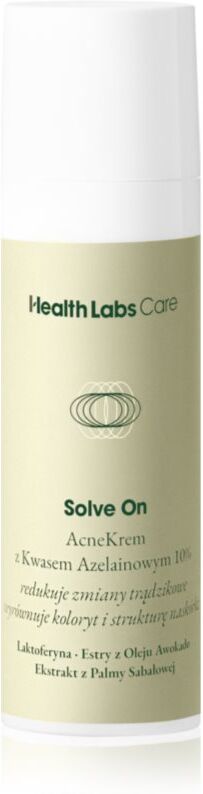
Care+ Health Labs Care Solve On face cream against imperfections in acne-prone skin 30 mlHealth Labs Care Solve On, 30 ml, Moisturisers for Women, Oily and problem skin prone to acne has its own specific needs and this is what the Health Labs Care Solve On face cream targets. It fights imperfections such as spots and blackheads, helps regulate excess sebum production and normalises the skin to keep it in balance. Characteristics: works on blemishes reduces excessive sebum production soothes irritation and redness How to use: Apply to cleansed skin and massage in using a circular motion. Do not rinse.24,57 £*Shipping: 3,99 £Secure redirect to the provider
-
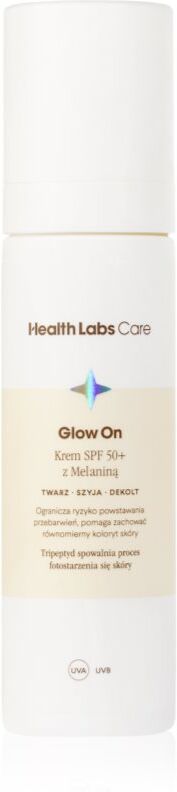
Care+ Health Labs Care Glow On SPF 50+ with Melanin day cream SPF 50+ 50 mlHealth Labs Care Glow On SPF 50+ with Melanin, 50 ml, Protection against Sunlight for Women, Protect your skin against premature ageing and other damage caused by sun exposure. The delicate skin on your face is far more sensitive than the skin on the rest of your body and is exposed to the sun all year round – another reason why it is important not to neglect skin protection. The Health Labs Care Glow On SPF 50+ with Melanin is a product with a mineral UV filter that forms a barrier on your skin providing reliable protection for your skin against UV rays, to help you prevent not just sunburn and pigment spots, but also reduced skin elasticity, collagen loss and other signs of skin ageing. Characteristics: is absorbed quickly protects skin against UVA and UVB radiation creates a barrier to protect the skin against external factors How to use: Apply to the face, neck and chest. Apply the product around 20 minutes before exposing skin to the sun. The optimal dose is obtained when you press the pump 4-5 x.21,68 £*Shipping: 3,99 £Secure redirect to the provider
-
What is the difference between the past participle and the present participle?
The past participle is a verb form used to indicate a completed action or state that occurred in the past. It is often used with auxiliary verbs to form the perfect tenses (e.g., "has eaten," "had gone"). The present participle, on the other hand, is a verb form used to indicate an ongoing action or state in the present or future. It is formed by adding "-ing" to the base form of the verb and is used to create the progressive tenses (e.g., "is eating," "will be going"). **
-
How can the terms premature, simultaneous, and subsequent be explained in relation to past participle, present participle, and future participle?
The terms premature, simultaneous, and subsequent can be explained in relation to past participle, present participle, and future participle based on their timing in relation to the action of the verb. The past participle refers to an action that has already been completed, making it premature in relation to the present moment. The present participle refers to an action that is happening at the same time as something else, making it simultaneous. The future participle refers to an action that will happen at a later time, making it subsequent to the present moment. These terms help to clarify the timing of the action in relation to the verb. **
-
What is a nominalized participle?
A nominalized participle is a verb form that has been turned into a noun. This is done by adding a suffix to the participle form of the verb, which allows it to function as a noun in a sentence. Nominalized participles are commonly used in various languages to express actions or qualities in a more abstract or general way. **
-
What is a substantivized participle?
A substantivized participle is a verb form that has been turned into a noun by adding a definite article and declining it for case, gender, and number. In other words, it is a participle that has been transformed into a noun and can function as a subject, object, or complement in a sentence. This process allows the participle to take on the characteristics of a noun while still retaining some of its verbal qualities. **
* All prices are inclusive of VAT and, if applicable, plus shipping costs. The offer information is based on the details provided by the respective shop and is updated through automated processes. Real-time updates do not occur, so deviations can occur in individual cases. ** Note: Parts of this content were created by AI.